Is the Bay Area Manila Worth Buying Into? A Data-Driven Analysis (1Q 2026)
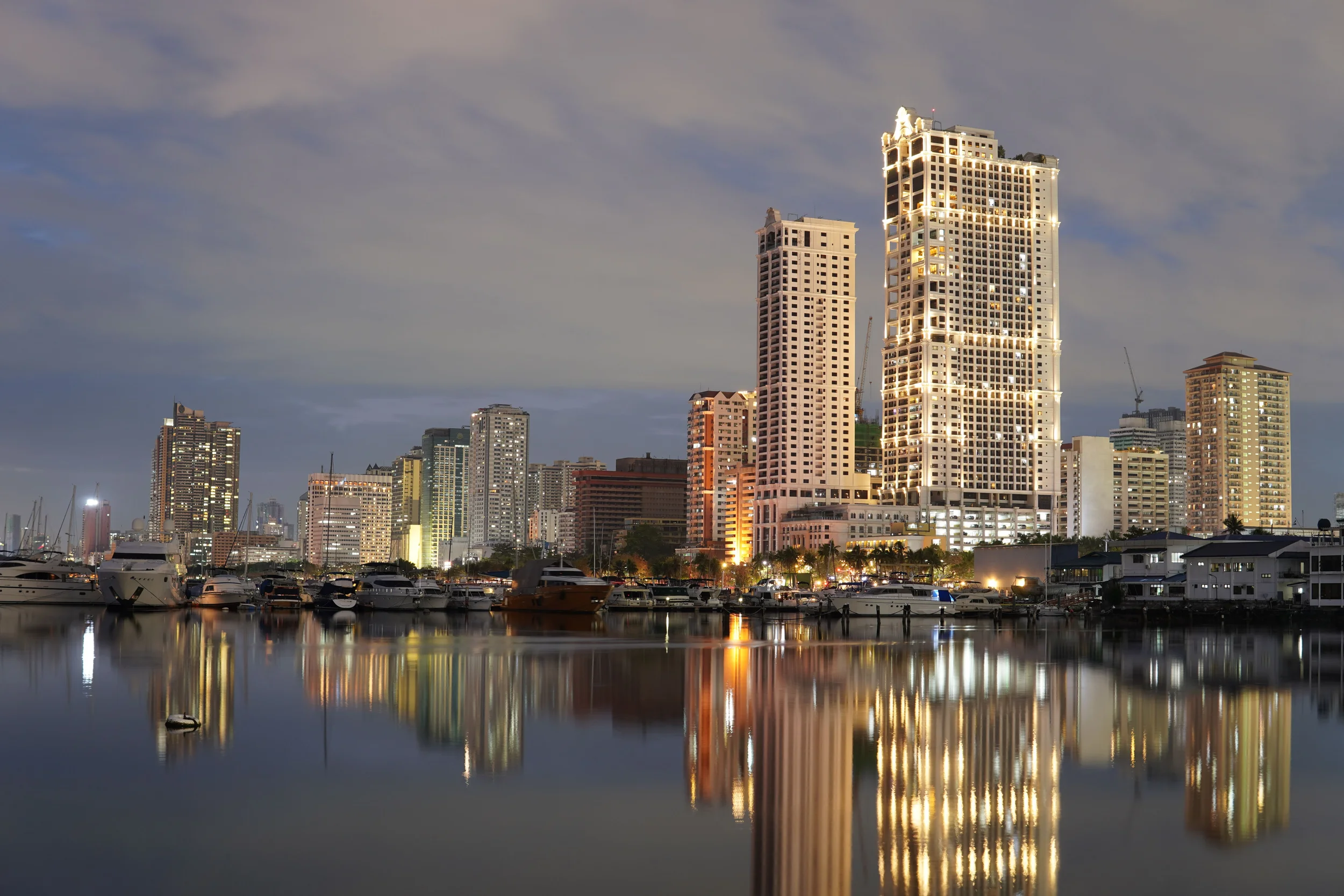
The Bay Area in Manila — covering Pasay, Parañaque, and the SM Mall of Asia complex — has been one of the most polarizing real estate stories in the Philippines. A few years ago, it was the darling submarket: gleaming new towers, casino tourism, POGO tenants pushing rents up, and an aggressive reclamation pipeline promising more development.
Today, the picture is very different. According to Savills Philippines' 1Q 2026 Metro Manila Office Briefing, the Bay Area office market actually got worse in the first quarter of 2026 — vacancy climbed from 33.7% to 39.3% on a negative net take-up of -58,400 sqm.
So is the Bay Area Manila still worth buying into in 2026? The honest answer: it depends entirely on your price, holding horizon, and risk tolerance. Let's break down the Savills data.
The 1Q 2026 Numbers: Bay Area at a Glance (Savills)
Office stock: 1,260,000 sqm
Office vacancy (1Q 2026): 39.3% (up sharply from 33.7% in 4Q 2025)
Net take-up (1Q 2026): -58,400 sqm (a sharp reversal from positive net absorption in Q4 2025)
Average asking rent: ₱700 / sqm / month (rose slightly despite vacancy spike)
Upper rental rate: ₱1,000 / sqm / month
Upcoming office supply (2026–2030): 180,000 sqm — among the heaviest in Metro Manila
Newest delivered building: Remains fully vacant despite the district having seen no new supply for the previous 11 quarters
That last data point is brutal context. Savills explicitly contrasts it with BGC's Pioneer House, which entered the market at 82% pre-leased. Tenants are choosing where to go, and the Bay Area isn't winning.
On the residential side, the Savills Panorama 2026 report notes the Bay Area's outsized share of floated condominium supply across Metro Manila — meaning the existing oversupply is being compounded by significant new supply still in the pipeline.
How the Bay Area Got Here
Three forces created today's oversupply, all reflected in the Savills data:
POGO exit. The Philippine Offshore Gaming Operator ban removed a large block of tenants who were paying premium rents in Bay Area buildings. Savills explicitly notes that "the absence of significant demand from the offshore gaming sector continues to leave a void in the Bay Area, making the regional recovery dependent on the diversification of the tenant base."
Investor-driven residential absorption that has now stalled. Bay Area condos were heavily marketed to investors targeting short-stay, Airbnb, and POGO-related rentals — not end-users. When that rental demand collapsed, so did absorption.
Aggressive supply pipeline still ahead. Pre-COVID launches kept completing well into the downturn, and Savills notes 180,000 sqm of additional office supply through 2030.
The reclamation pipeline (Pasay Harbor's 265-hectare project and the 360-hectare SM MOA-linked reclamation) means the long-term land story isn't dead — but the short and medium-term oversupply story is acute.
A Disconnect: Rents Edged Up Despite the Vacancy Spike
One of the most telling data points in Savills' 1Q 2026 briefing: despite the dramatic deterioration in vacancy (33.7% → 39.3%), Bay Area average rents actually edged upward to ₱700/sqm.
Savills' read: "This slight increase amidst a bloated vacancy rate highlights a widening disconnect between landlord expectations and current market liquidity. While the negative net absorption suggests a need for downward price adjustments to spur demand, many property owners appear to be holding their asking rates steady — or even raising them slightly — to offset rising operational costs or to maintain high-value valuations."
Translation for property buyers: list prices in the Bay Area may not reflect actual market clearing prices. What you're shown is anchored to landlord hope. What you can actually negotiate to is something else entirely.
So Is the Bay Area "Cheap"?
On a per-sqm basis, Pasay condo prices are notably below BGC and Makati CBD. The Bay Area looks like a bargain. But "cheap" is meaningless without context — here's what matters:
Metric | Bay Area | BGC | Makati CBD |
|---|---|---|---|
Office vacancy (Savills 1Q 2026) | 39.3% (worsening) | 8.0% (improving) | 21.3% (improving) |
Office net take-up (1Q 2026) | -58,400 sqm | +24,900 sqm | +16,400 sqm |
Avg office rent (₱/sqm/mo) | 700 | 1,086 | 984 |
Office pipeline (2026–2030) | 180,000 sqm | 111,200 sqm | 76,000 sqm |
Tenant base | Short-stay/former POGO | Multinationals | Long-term professionals |
The Bay Area is cheap relative to BGC/Makati, but it's also carrying structurally different risks: more pipeline coming, weaker office demand, and a tenant base that hasn't been replaced.
When the Bay Area Makes Sense
Despite the data, there are buyer profiles for whom Bay Area Manila can still work in 2026:
1. Deep-discount opportunistic buyers
If you find a motivated seller — a developer running an aggressive promo, a distressed resale, or an OFW liquidating — Bay Area units can occasionally be acquired well below replacement cost. The play is value-buying at the bottom of the cycle. With Savills' data showing landlords holding asking rates above market-clearing levels, the gap between list and sellable is real, and disciplined buyers can exploit it.
2. Long-horizon investors (10+ years)
Reclamation projects, infrastructure improvements, and eventual tourism/casino recovery could revalue the area over a long horizon. If you don't need cash returns and can sit through 5–10 years of vacancy pressure, the entry price may eventually look smart.
3. End-users who actually want to live there
Bay views, casino proximity, and access to MOA's retail are real lifestyle amenities. If you're an owner-occupier, the rental-yield problem doesn't apply to you. Just understand resale may take time.
When the Bay Area Does NOT Make Sense
You're banking on rental yield. With the office market shedding 58,400 sqm in a single quarter, residential tenant demand is downstream of bad news.
You need liquidity in 1–3 years. Resale velocity has slowed dramatically.
You're a first-time investor. Cycle-bottom value plays require experience and conviction.
You're financing with a stretched LTV. Negative equity risk is real if landlords are forced to mark to market.
Red Flags Specific to Bay Area Deals
If you do choose to buy, scrutinize these:
Building occupancy. Drive by at night. How many lights are on? Savills' data confirms there are office buildings in the Bay Area that are 100% empty — adjacent residential won't be far behind.
HOA financial health. With high vacancy, condo dues collections suffer. Underfunded HOAs lead to special assessments later.
Original sale price vs. current pricing. Investor-owned units may have to sell at significant losses; understand what the seller paid.
Proximity to reclamation projects. New supply concentrated near your unit could compete with your resale.
Asking-vs-clearing price gap. Per Savills, landlords in the Bay Area are holding asking rates above market-clearing levels. Negotiate aggressively.
The 1Q 2026 Verdict
Per Savills' most recent data, here's the honest answer:
For most buyers right now: no. Bay Area office vacancy at 39.3%, with a negative -58,400 sqm net take-up in a single quarter, plus 180,000 sqm more office supply on the way, plus an unreplaced POGO tenant base, makes this the toughest submarket in Metro Manila for typical rental investors or first-time buyers.
For a narrow set of buyers — opportunistic value players, very long-horizon investors, and owner-occupiers who genuinely want to live there — yes, but selectively, with eyes open, and on the right unit at the right price.
The Bay Area's long-term thesis (reclamation, infrastructure, tourism recovery) is not dead. It's just been pushed several years out. If you can underwrite a deal that survives until that thesis plays out, you can win. If you can't, BGC and Makati will likely treat you better in the meantime.
Compare Submarkets Side-by-Side on Listd.ph
The fastest way to evaluate Bay Area listings against BGC, Makati, and other Metro Manila submarkets is to use Listd.ph. Filter by price per square meter, building, and location — and compare the actual deals available, not just the headlines.
Primary source: Savills Philippines — 1Q 2026 Metro Manila Office Briefing (April 2026) and Savills Panorama 2026 (February 2026). All vacancy, rental, net take-up, and supply figures above are from these reports. Supplementary context from Wikipedia (Land Reclamation in Metro Manila), Philippine News Agency, and BusinessWorld.
About the Author


Enjoyed this article? Share it with others.
Latest Posts

Conjugal Property in the Philippines: What Married Couples Must Know Before Buying or Selling
Conjugal vs. exclusive property and the spousal consent rule explained—what married couples must know before buying or selling real estate in the Philippines.

Property Insurance in the Philippines: A Complete Guide for Homeowners and Condo Buyers
Everything you need to know about home and condo insurance in the Philippines — coverage types, costs, requirements, and top providers.

How to Refinance a Housing Loan in the Philippines: A Complete Guide to Lowering Your Monthly Payment
Learn how to refinance your housing loan in the Philippines, when it's worth it, what it costs, and how to compute your real savings before switching lenders.

How to Transfer Property Title in the Philippines: A Step-by-Step Guide
Step-by-step guide to transferring property title in the Philippines — BIR, Registry of Deeds, taxes, fees, and timelines explained.
Stay Updated on Market Trends
Get the latest real estate insights, investment tips, and market analysis delivered to your inbox every week.
Join 10,000+ subscribers. No spam, unsubscribe anytime.