A First-Time Homebuyer’s Guide to Buying Property in the Philippines

Buying your first home is one of the biggest financial moves you will ever make. Without a clear roadmap, the process can feel intimidating. Whether you’re hunting for a high-rise condo in Metro Manila, a spacious house and lot in Laguna, or a townhouse in Cebu, the buying journey follows a predictable set of steps.
Here is everything you need to know before you sign on the dotted line.
Step 1: Set Your Budget (Before You Fall in Love with a Property)
The most common mistake first-time buyers make is browsing listings before knowing what they can actually afford. Start with your monthly take-home pay and work backward.
Most Philippine banks and lending institutions follow a strict rule of thumb: your monthly mortgage payment should not exceed 30% of your gross monthly income. You also need to factor in the down payment (usually 10% to 20% of the property’s selling price) and closing costs.
Quick Affordability Example:
Gross Monthly Income: PHP 50,000
Comfortable Monthly Mortgage (30%): PHP 15,000
Use this PHP 15,000 baseline to estimate the property price you can realistic finance, rather than stretching your budget thin.
Step 2: Choose Your Financing — Pag-IBIG or Bank Loan?
Most Filipino homebuyers finance their homes through either the Pag-IBIG Fund (HDMF) or a commercial bank. Here is how they stack up:
Feature | Pag-IBIG Housing Loan | Bank Housing Loan |
|---|---|---|
Best For | Employed Filipinos, OFWs, and low-income earners | Buyers needing larger loans or faster processing |
Max Loan Amount | Up to PHP 6 Million | Varies (Up to 80% of the property's appraised value) |
Interest Rates | Standard rates generally range from 5.75% to 6.25% (depending on repricing). Subsidized rates exist for low-income earners. | Fixed rates generally between 6% and 9.5% for the first 1 to 5 years. |
Max Loan Term | Up to 30 years | Usually up to 20 or 25 years |
Key Requirement | Must be an active member with at least 24 months of contributions. | Strict income, credit, and employment verification. |
Pro-Tip: Get a loan pre-approval before you start property hunting. Knowing exactly how much a lender is willing to give you makes your offers far more credible to sellers and developers.
Step 3: Find the Right Property
Once your budget and financing are locked in, the hunt begins. Keep these three factors in mind when shortlisting:
Location & Lifestyle: Think about your daily commute, nearby schools, hospitals, and grocery stores. A cheaper property an hour outside the city might end up costing you more in transportation and lost time.
Developer Reputation: If you are buying a pre-selling condo or house, research the developer. Do they deliver projects on time? What is the build quality of their past turnovers?
Resale & Rental Value: Buy in areas with consistent demand. Cities like Makati, Taguig, Quezon City, and Cebu historically hold strong property values, protecting your investment even if you decide to move later.
Step 4: Understand the Paperwork
Do not sign anything until you understand what the document means. Here are the essential legal documents you will encounter:
Contract to Sell (CTS): A preliminary agreement outlining the payment terms. Full ownership is not transferred yet. This is standard for pre-selling properties.
Deed of Absolute Sale (DOAS): The final document that transfers ownership from the seller to you, signed once the property is fully paid.
Transfer Certificate of Title (TCT): Your official proof of ownership for a house and lot or vacant land.
Condominium Certificate of Title (CCT): The equivalent of a TCT, specifically for condo units.
Tax Declaration: A local government document that assesses the property for real property tax.
Always hire a licensed real estate broker to guide you. For complex resale transactions, a property lawyer can ensure the title is clean and free of liens.
Step 5: Budget for Taxes and Closing Costs
Buyers are responsible for several government fees when transferring the title. Budget roughly 3% to 5.5% of the purchase price to cover these closing costs:
Documentary Stamp Tax (DST): 1.5% of the selling price or fair market value (zonal value), whichever is higher.
Local Transfer Tax: Up to 0.5% in provinces, and up to 0.75% in Metro Manila cities.
Registration Fee: Paid to the Registry of Deeds to officially record the transfer. This is based on a graduated schedule but usually costs a few thousand pesos.
Notarial & Admin Fees: Standard fees for notarizing the DOAS and processing the paperwork.
(Note: Capital Gains Tax, which is 6% of the selling price or fair market value, is typically shouldered by the seller, though this can be negotiated).
Step 6: Transfer the Title to Your Name
After the Deed of Absolute Sale is notarized and the seller pays the Capital Gains Tax, you (or your broker) must secure a clearance from the Bureau of Internal Revenue (BIR).
With the BIR clearance and paid closing costs in hand, you head to the Registry of Deeds. Once processed, they will issue a new TCT or CCT under your name. Keep physical and digital copies of your notarized DOAS, the new title, and the updated Tax Declaration in a secure place.
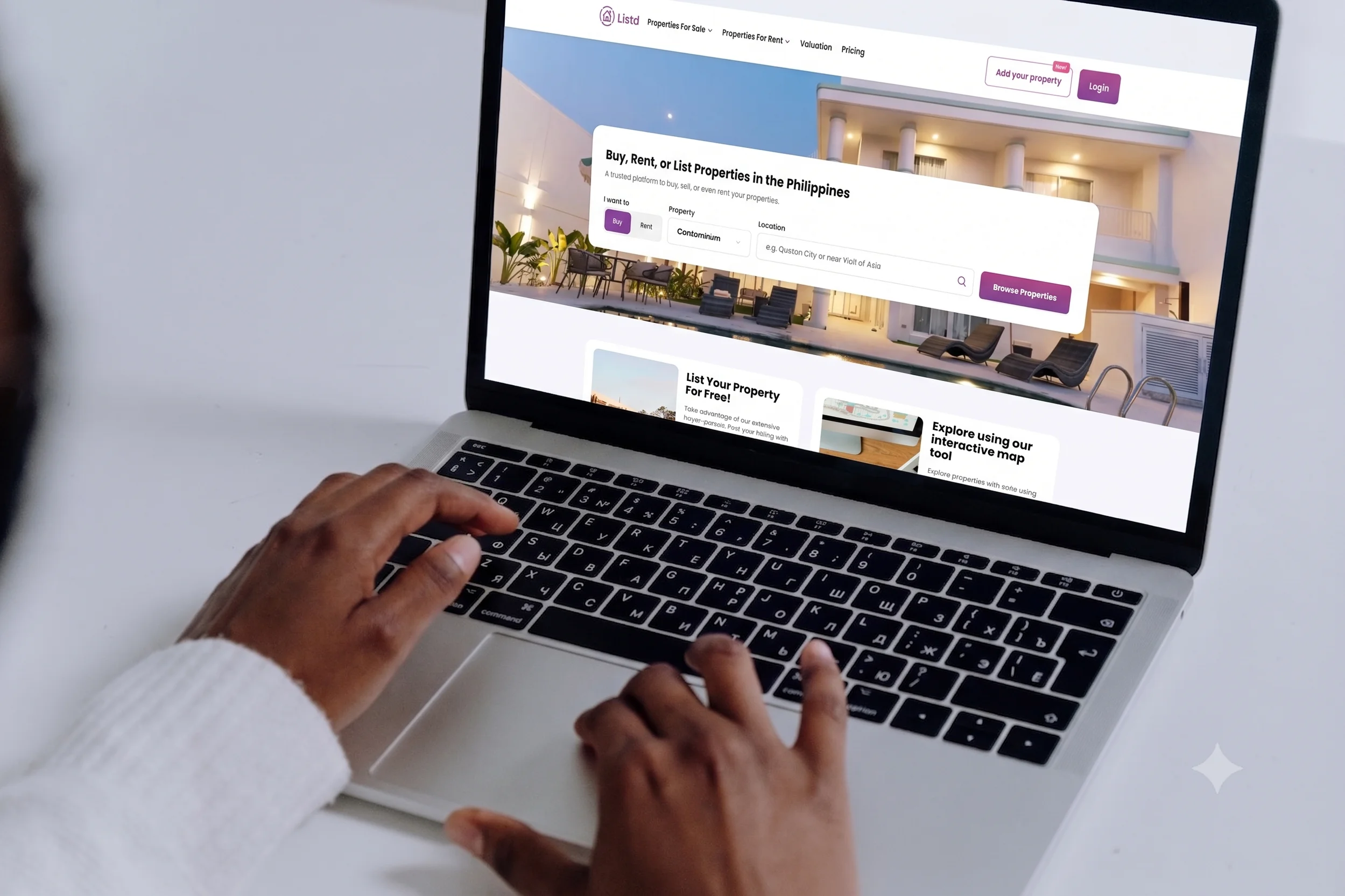
Find Your First Home on Listd.ph
Ready to start looking? Listd.ph is the Philippines’ fastest-growing property marketplace, featuring verified listings across Metro Manila, Laguna, Cebu, and beyond.
Use our interactive map to explore neighborhoods, filter by your exact budget, and find the perfect property for your first home.
Start your search on Listd.ph today.
About the Author

Enjoyed this article? Share it with others.
Latest Posts

PEZA-Accredited Buildings in the Philippines: What Property Buyers and Investors Need to Know
Discover what PEZA-accredited buildings are, their tax incentives under CREATE MORE, top locations in BGC, Makati & Cebu, and why they matter for real estate investors.

Living in BGC: A Complete Neighborhood Guide
Thinking of living in BGC? Discover everything about the Bonifacio Global City neighborhood—condo prices, schools, commute, dining, and prime real estate.

How to Evaluate a Property Developer in the Philippines Before You Buy
Buying a condo or house in the Philippines? Learn how to verify a developer's DHSUD license, check their track record, and spot red flags before signing.

Pag-IBIG Raises Housing Loan to P10M: What Buyers & Brokers Need to Know
Pag-IBIG Fund raised its housing loan ceiling to P10 million. Here's what the new rates, terms, and condo glut mean for Filipino homebuyers, brokers, and developers.

BGC Office Market 2026: What the Data Means for Condo Buyers Near Bonifacio Global City
Savills 1Q 2026 data shows BGC office vacancy at just 8.0%. Discover what tightening supply and rising rents mean for condo prices and investments near Bonifacio Global City.

Complete Guide to Taxes and Fees When Buying Property in the Philippines
Buying property in the Philippines? Learn the full breakdown of taxes, fees, and closing costs so you can budget accurately before you sign.

Real Estate Broker Lead Generation in the Philippines: Top Strategies for 2026
Discover proven lead generation strategies for real estate brokers in the Philippines. Attract more buyers and sellers with digital tools, AI platforms, and smart outreach tactics.

Condo HOA Fees in the Philippines: What's Covered, What's Not, and Your Rights as an Owner
Understand condo association dues in the Philippines — what's covered, rate ranges by area, your legal rights as an owner, and how to dispute illegal increases.

Commercial Space Checklist: What Top-Tier Tenants in Metro Manila Actually Demand
What do corporate tenants really want? From advanced EV charging to smart HVAC and bulletproof connectivity, discover the ultimate office space checklist for Metro Manila.

How to Spot Real Estate Scams in the Philippines: A Buyer's Protection Guide
Learn to protect yourself from property fraud in the Philippines — from fake titles to ghost projects. Includes step-by-step verification guides and legal remedies.

What the National Land Use Act Means for Property Buyers and Investors in the Philippines
The Philippines' National Land Use Act (NLUA) just passed the House. Here's what it means for buyers, investors, and developers in the property market.

Living in Mandaluyong: A Complete Neighborhood Guide
Explore our complete guide to living in Mandaluyong. Discover top neighborhoods, property prices, and lifestyle perks. Find your next home on Listd.ph!

Living in Alabang: A Complete Neighborhood Guide
Weighing a move to the south? Discover if living in Alabang is right for you with our data-driven guide to neighborhoods, schools, and property prices.

Capital Gains Tax in the Philippines: A Complete Guide for Property Sellers
Learn how capital gains tax works in the Philippines for property sellers - computation, exemptions, filing steps, and the full cost-of-selling breakdown.

Bank Housing Loan Philippines: A Complete Guide
Compare 2026 bank housing loan rates in the Philippines — BDO, BPI, Metrobank, and more. Find out which bank fits your profile and how to apply.

Living in Pasig City: A neighborhood and property guide
Weighing your Metro Manila options? Discover if living in Pasig City is right for you with our data-driven guide to neighborhoods, commutes, and property prices.

How to sell bare units faster with AI virtual staging
Help buyers see the potential of empty spaces. Learn how AI virtual staging allows brokers to transform bare units online while maintaining client trust.

Labor Day 2026: Securing the Filipino worker's dream of homeownership
Protect your hard-earned savings. This Labor Day, learn how Filipino workers can safely secure their dream home through the Pag-IBIG housing program.

When Supply Outpaces Demand: Navigating Metro Manila’s Condo Market in a High-Rate Environment
Protect your condo investment. Learn how to navigate Metro Manila's current oversupply and rising interest rates with strategic pricing and leasing options.

Condo pressures spur developer diversification
Navigate shifting market trends safely. Learn how current condo pressures are pushing Philippine developers to diversify and what it means for property buyers.

How to sell your property in the Philippines: A complete guide
Avoid costly surprises. Learn the step-by-step process of selling your property in the Philippines, from navigating seller taxes to safe title transfers.

Living in Makati: A Complete Neighborhood Guide
Thinking of living in Makati? Explore the best neighborhoods, average condo prices, commute tips, and lifestyle perks in the Philippines' financial capital.

Where to Buy a Vacation Home in the Philippines
Discover the top places to buy a vacation home in the Philippines. Compare actual prices, rental yields, and hidden property risks before you invest. Learn more.

TCT vs. CCT: What Every Filipino Property Buyer Should Know
Buying property in the Philippines? Learn the critical differences between a Transfer Certificate of Title (TCT) and a Condominium Certificate of Title (CCT) before you sign.

OFW Property Investment in the Philippines
Secure your hard-earned savings. Discover the safest ways for OFWs to invest in Philippine real estate, verify properties, and build a future back home.

Real Property Tax in the Philippines: Complete Guide
Learn everything about real property tax (amilyar) in the Philippines - how to compute it, when to pay, and how to avoid penalties.

Preselling vs. Ready-for-Occupancy Condo in the Philippines: Which Is Right for You?
Preselling vs. RFO condo: which is right for you? Discover the pros, cons, and legal protections every Philippine property buyer needs to know before signing.

Foreclosed Properties in the Philippines: A Buyer's Guide
Looking to buy foreclosed properties in the Philippines? Learn how to find, bid on, and buy bank-owned or Pag-IBIG foreclosures at below-market prices.

How to get an online property valuation report in the Philippines
Learn how to get an accurate online property valuation report in the Philippines. Discover the Listd.ph AI valuation tool to make confident real estate decisions.

Rental Property Investment: How to Evaluate a Property Before You Buy
Master your next rental property investment in the Philippines. Learn how to evaluate rental property, calculate yield, and run proper due diligence.

How to Choose the Right Property Manager (A Guide for First-Time Investors)
Not sure how to choose a property manager? This guide covers fees, screening, staff ratios, and communication standards to help first-time investors get it right.

Is It a Good Time to Buy Property in 2026? What the Market Is Telling Us
Thinking of buying property in 2026? Here's an honest look at interest rates, inventory levels, and market signals to help you decide if now is the right time.

The modern-day hero's guide to safe property investing in the Philippines
Protect your hard-earned remittances. Discover the safest way for OFWs to invest in Philippine real estate, avoid scams and verify developers with Listd.ph.

Rent to Own House Philippines: The Complete Guide
Everything you need to know about rent to own homes in the Philippines — how it works, what to watch out for, and how to find the best deals. Check it here.

PagIBIG Housing Loan Requirements for Self-Employed Applicants Checklist
Essential Pag-IBIG housing loan requirements. Learn how to prep your HLAF, valid IDs, and selfie for a faster application. Start your home journey now!

How to apply for a house loan through Pag-IBIG: A step-by-step guide
Turn your dream home into reality. Discover how the Pag-IBIG housing loan offers the most accessible path to homeownership in the Philippines. Learn more!

Cost of renting an apartment in the Philippines
Determining the cost of renting an apartment in the Philippines is complex. Navigate the rental market, move-in fees, and location variables confidently.

Cost of building a house in the Philippines
Learn the vital factors influencing your 2026 home construction budget in the Philippines. Gain insights on material costs, budgeting, and planning your ideal house.

Buying a House as an Unmarried Couple in the Philippines: A Safety Guide
Buying a house in the Philippines as an unmarried couple? Learn the essential legal differences (Article 147 vs 148), titling options, and 3 key steps to protect your investment. Secure your future home.

BIR Zonal Values in the Philippines 2026: The Essential Property Seeker's Guide
Avoid hidden property costs. Learn what BIR zonal values are, how to easily check them online, and how they impact your real estate taxes in the Philippines.

Condo for Sale in the Philippines: The Complete Buyer's Guide
Searching for a condo for sale in the Philippines? Discover 2026 prices, bank rates, hidden costs, the 50-year rule explained, and a step-by-step buying checklist.

The Ultimate House Buying Checklist: Don’t Buy a Home Without It
Buying a home in the Philippines? Master the process with our 6-phase checklist. From Pag-IBIG readiness to title transfers, ensure a safe and secure purchase.
Stay Updated on Market Trends
Get the latest real estate insights, investment tips, and market analysis delivered to your inbox every week.
Join 10,000+ subscribers. No spam, unsubscribe anytime.