How to Spot Real Estate Scams in the Philippines: A Buyer's Protection Guide
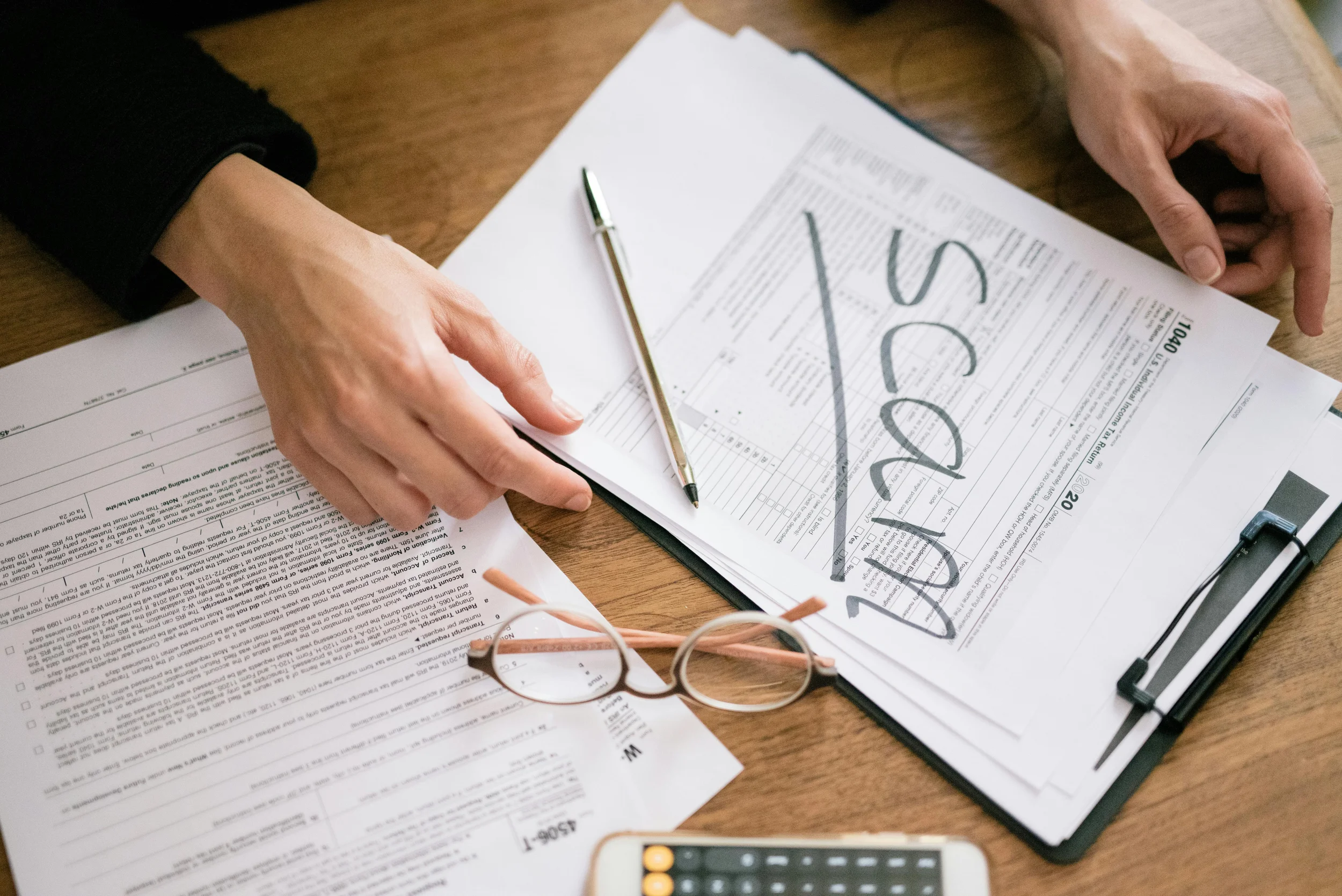
The Philippines ranked second globally for suspected digital fraud rates in 2025, with 13.4% of all digital transactions flagged as potentially fraudulent (ScamWatchHQ, 2025). Property fraud is a significant slice of that number — and unlike a phishing SMS you can ignore, falling victim to a real estate scam can mean losing millions of pesos and years of savings with no fast way to get them back.
Philippine courts are notoriously slow. A contested property case typically takes three to seven years to resolve (Bamboo Routes, 2026). Scammers count on this. They know that even if a buyer has a valid legal claim, the cost and time of pursuing it often outweighs the loss — especially for OFW buyers making decisions from abroad, or expats unfamiliar with local processes.
This guide is a complete, step-by-step buyer's protection manual — covering the most common scam types in the Philippine property market, the exact verification steps you should run before handing over a single peso, a red flag checklist, and the legal remedies available to you if things go wrong.
Why Property Fraud Persists in the Philippines
Three structural conditions make the Philippine real estate market attractive to fraudsters.
First, the demand-supply pressure. Colliers Philippines reports that Metro Manila alone has over 30,000 unsold ready-for-occupancy condominium units as of Q4 2025. When legitimate developers compete aggressively for buyers, unlicensed sellers and fake projects can more easily blend in — especially in provinces and secondary cities where regulatory oversight is less consistent.
Second, the complexity of Philippine land records. Many titles still exist only in paper form at Registry of Deeds offices. Titles can be fraudulently altered, duplicated, or held up in estate proceedings for decades. The Land Registration Authority's (LRA) digitisation program is ongoing, but the historical backlog of paper titles creates opportunities for forgery.
Third, the rise of social media property marketing. DHSUD has repeatedly issued advisories warning buyers about unlicensed sellers marketing raw lots and pre-selling projects through Facebook, where neither the project nor the broker's credentials can be easily verified at a glance. In June 2025, NBI-SEMRO arrested four individuals in Davao City who had been marketing "raw lots" through Facebook without a DHSUD Certificate of Registration or License to Sell (Philippine News Agency, 2025).
The 7 Most Common Real Estate Scams in the Philippines
1. Fake or Forged Land Titles (TCT/CCT Fraud)
This is the most financially devastating scam type. Fraudsters fabricate or alter Transfer Certificates of Title (TCT) or Condominium Certificates of Title (CCT) to make it appear they own a property — or that a property is free from encumbrances when it isn't.
Typical methods include printing counterfeit titles on security paper with forged Registry of Deeds stamps, altering the owner's name on a genuine title while keeping the rest of the document intact, and presenting photocopies only — never the original — to prevent detailed inspection.
Average loss per victim: ₱1,000,000 to ₱5,000,000 (Bamboo Routes, 2025). One documented 2025 case involved a buyer losing ₱160,000 as a reservation fee for a property with a fraudulent title in Naic, Cavite.
2. Double Selling (Selling One Property to Multiple Buyers)
The seller executes a valid sale of a property to Buyer A, collects full or partial payment, then executes another sale of the same property to Buyer B — often using the original title because the first sale was never registered at the Registry of Deeds.
This scam exploits the gap between when a Deed of Sale is signed and when it is annotated on the title. The first buyer to register wins the property under Philippine law; subsequent buyers lose their payments.
Double selling is a criminal offense under Article 316 of the Revised Penal Code, punishable by imprisonment and/or a fine.
3. Ghost Projects and Pre-Selling Scams
Ghost project scams involve collecting reservation fees and down payments for subdivision lots or condominium units in developments that either do not exist, are not properly licensed, or will never be completed as marketed.
Presidential Decree No. 957 (the Subdivision and Condominium Buyers' Protective Decree) explicitly prohibits any developer from selling, advertising, or offering subdivision lots or condominium units to the public without first securing a License to Sell (LTS) from DHSUD. Selling without an LTS carries criminal penalties of up to 10 years imprisonment under Section 39 of PD 957, plus administrative fines of up to ₱100,000 per violation.
Average loss per victim: ₱200,000 to ₱1,500,000. In February 2025, DHSUD Region 7 penalized a developer in Lapu-Lapu City for selling 75 unregistered lots — collecting millions from buyers without any DHSUD licensing or legitimate title ownership (DHSUD, 2025).
4. Unlicensed Brokers and Agents
Under RA 9646 (the Real Estate Service Act), all brokers must hold a valid PRC (Professional Regulation Commission) license. Operating as a real estate broker without a PRC license is a criminal offense. Unlicensed brokers have no regulatory accountability — they can collect commissions and disappear, or worse, facilitate fraudulent transactions without risk of professional sanction.
This is a significant risk for buyers transacting through social media leads or informal referrals, where the agent's credentials are never checked.
5. "Yuta Data-Data" and Raw Land Schemes
Common in Mindanao but spreading across Visayas and parts of Luzon, "yuta data-data" (roughly: "land being offered cheaply") scams involve sellers offering agricultural land or raw lots at below-market prices — often claiming to represent heirs, government-distressed sellers, or relocating families.
The land either doesn't belong to the seller, carries outstanding liens or DAR (Department of Agrarian Reform) encumbrances, or is an untitled piece of land being passed off as having a clean TCT. These scams specifically target buyers looking for deals in provincial areas who skip due diligence because the asking price seems too good to pass up. That instinct is correct: it usually is.
6. Rental Scams That Escalate to Purchase Fraud
This scam begins with a legitimate-looking rental listing. Once a prospective tenant shows interest, the "landlord" (who does not own the property) pressures them into a lease-to-own or purchase arrangement, collects a large downpayment, and disappears. The actual owner has no knowledge of the transaction.
This variant is increasingly common on Facebook Marketplace and Carousell, where verification of ownership is never required by the platform.
7. Condo Takeover Scams
In this scam, a fraudulent seller poses as the unit owner of an existing condominium, presents falsified CCT documents, and accepts payment from a buyer who never deals directly with the actual registered owner. The real owner discovers the fraud only when a stranger attempts to take possession of the unit.
This scam exploits the fact that most condo unit CCTs are stored in banks or financing companies as collateral — meaning the registered owner may not physically possess the original title, making it harder to spot a fake.
The Complete Buyer Verification Checklist
Step 1 — Verify the Title at the Land Registration Authority (LRA)
Never accept a photocopy of a title as proof of ownership. A legitimate seller will have no objection to you verifying the title directly with the LRA.
How to do it: Request a Certified True Copy (CTC) of the title via the LRA's eSerbisyo portal at eserbisyo.lra.gov.ph. You will need the Registry of Deeds location and the exact title number. The CTC can be paid via GCash, Maya, or debit/credit card, and is delivered within 3–7 working days.
What to check on the CTC:
The registered owner's name matches the seller's government-issued ID exactly
There are no adverse annotations (liens, mortgages, lis pendens, notices of levy)
The technical description of the land matches what is being sold
The title shows no cancelled or superseded entries
A title annotated with a mortgage means the seller may still owe the bank — and you could be acquiring a property with an outstanding loan attached.
Step 2 — Verify the Developer's DHSUD License (for Pre-Selling and New Projects)
Before paying any reservation fee for a subdivision lot or condo unit, verify that the developer holds a valid Certificate of Registration (CR) and License to Sell (LTS) from DHSUD. You can verify these directly at the DHSUD regional office covering the project location, or through the DHSUD official website at dhsud.gov.ph.
Ask the developer's sales representative to show both the CR and LTS documents — the LTS should have a current validity date and specifically cover the project you're buying into. A developer may have a valid CR for the company but no LTS for a specific phase or project.
Step 3 — Verify the Broker's PRC License
Ask your broker or agent for their PRC license number and verify it on the PRC Verification Portal at verification.prc.gov.ph. A licensed real estate broker's name and license number should appear in the official registry.
Any agent who hesitates, makes excuses, or claims they work "under" a licensed broker without being licensed themselves is a red flag. Under RA 9646, a real estate salesperson must also be registered with the PRC and must work under a licensed broker.
Step 4 — Check the Tax Declaration at the Municipal Assessor's Office
Request a copy of the Tax Declaration (TD) for the property from the local Municipal or City Assessor's Office. The TD should reflect the current registered owner — and it should match the name on the title. Discrepancies between the title and the TD are a signal that the property's ownership history may be contested or the title may be fraudulent.
Step 5 — Confirm No Outstanding Real Property Tax Liabilities
Check with the Municipal or City Treasurer's Office whether there are outstanding unpaid real property taxes (amilyar) on the property. Buyers are responsible for paying delinquent taxes if they proceed with a purchase — some properties carry years of unpaid taxes that significantly add to your cost.
Step 6 — Conduct a Physical Site Inspection
Never buy a property you haven't personally inspected (or had a trusted representative inspect on your behalf). For pre-selling projects, visit the site and verify that: actual construction activity is occurring, the developer has visible on-site signage with contact information and DHSUD license numbers, and the unit/lot you are buying physically exists and is accessible.
Ghost project operators specifically avoid site visits by claiming the development is "in the planning stage" or that "construction will start once reservation targets are met."
Step 7 — Use a Licensed Notary and a Real Estate Lawyer
For any transaction above ₱1,000,000, engage an independent real estate lawyer to review the Deed of Sale, Contract to Sell, and title before you sign. Do not use a lawyer recommended by the seller. A lawyer's review fee is a small fraction of what you could lose.
Red Flags: Stop and Investigate Before Paying
The following should trigger immediate pause and deeper verification:
Seller will only show photocopies of the title, never the original or an LRA-verified CTC
Price is significantly below market value — 20% or more below comparable properties in the same area
Seller applies pressure to pay quickly ("someone else is viewing this weekend," "price goes up next week")
No DHSUD License to Sell presented for a pre-selling project
Broker cannot provide a PRC license number or deflects the question
Online-only seller with no verifiable physical address, no face-to-face meetings, and no broker representation
Seller is an heir or representative with a Special Power of Attorney (SPA) — SPAs can be forged; always verify with the principal
Property is priced as "as-is where-is" with a rushed timeline and no room for due diligence
Seller refuses to allow you to visit the Registry of Deeds to verify the title
Your Legal Rights and Where to File a Complaint
If you believe you have been defrauded, Philippine law gives you multiple avenues for recourse — though acting quickly is critical.
Criminal complaints: File an Estafa complaint under Article 315 of the Revised Penal Code with the National Bureau of Investigation (NBI) at nbi.gov.ph or with the Philippine National Police (PNP). For scams conducted online (social media listings, messaging apps), file with the NBI Cybercrime Division (NBI-CCD) or PNP Anti-Cybercrime Group (PNP-ACG).
Administrative complaints: File a complaint against a developer for PD 957 violations with the DHSUD regional office in the area where the property is located. For complaints against unlicensed brokers, file with the PRC.
Civil remedies: Pursue annulment of the deed of sale and recovery of payments plus damages through the regular courts. This route is slower (3–7 years average) but can result in full recovery of the purchase price with interest.
CICC Hotline: Call 1326 (24/7) for cybercrime complaints, or email [email protected] for online fraud reports.
A Note for OFWs and Foreign Buyers
OFWs and foreign nationals consistently experience higher individual losses in Philippine property scams — not because they are less intelligent, but because they are making high-stakes decisions remotely, under time pressure, and without the physical ability to conduct on-site verification.
If you are purchasing property from abroad: never pay any reservation fee, downpayment, or deposit before an independent Philippine-based lawyer or trusted representative has physically verified the title at the Registry of Deeds, inspected the site, and confirmed the developer's DHSUD credentials. A 30-day verification window is a reasonable request that any legitimate seller will accommodate.
Legitimate developers with proper licensing and clean titles have no reason to rush you.
Final Thoughts
The Philippine real estate market offers genuine, long-term value for buyers and investors who do their homework. But the same structural factors that make it attractive — rapid urbanisation, high demand, a mix of formal and informal property systems — also create conditions where fraud can thrive.
The good news: almost every scam described in this guide is preventable through the verification steps above. A Certified True Copy from the LRA, a DHSUD license check, and a PRC broker verification take less than a week and cost a fraction of what you stand to lose.
Before you sign anything, verify everything. And before you make one of the largest financial decisions of your life, let Listd.ph help you connect with verified properties and licensed professionals who operate transparently.
Browse verified listings at listd.ph.
Sources: DHSUD official advisories (dhsud.gov.ph), Philippine News Agency (pna.gov.ph), Bamboo Routes Philippines Property Risks Report 2026, ScamWatchHQ Philippines Scams 2025 Report, Colliers Philippines Residential Market Q4 2025, Land Registration Authority eSerbisyo portal (eserbisyo.lra.gov.ph), PD 957 (Subdivision and Condominium Buyers' Protective Decree), RA 9646 (Real Estate Service Act), RA 10175 (Cybercrime Prevention Act), Respicio & Co. legal commentaries.
About the Author


Enjoyed this article? Share it with others.
Latest Posts

How to Buy Agricultural Land in the Philippines: A Complete Buyer's Guide
Thinking of buying farm land in the Philippines? Learn DAR rules, CLOA title risks, land conversion, and the buyer due diligence steps that protect your money.
How to Write a Real Estate Listing That Sells in the Philippines
Learn how to write a property listing that sells fast in the Philippines — headlines, descriptions, photos, and CTAs that turn casual browsers into buyers.

How to Verify a Land Title in the Philippines: A Buyer's Step-by-Step Guide
Learn how to verify a land title in the Philippines, spot fake or doubled titles, and get a Certified True Copy from the Registry of Deeds before you buy.

BIR eCAR in the Philippines: What It Is and How to Get One
What the BIR eCAR is, the documents you need, taxes to pay, and the step-by-step process to transfer a property title in the Philippines without delays.
Should You Buy a Condo Parking Slot in the Philippines? Costs, Title Rules, and What to Check
Should you buy a condo parking slot in the Philippines? Learn the real costs, separate CCT title rules, and what to check before you pay.
Stay Updated on Market Trends
Get the latest real estate insights, investment tips, and market analysis delivered to your inbox every week.
Join 10,000+ subscribers. No spam, unsubscribe anytime.