TCT vs. CCT: What Every Filipino Property Buyer Should Know

When you buy real estate in the Philippines, the most important document you will ever handle is the property title. But depending on what you’re buying—a house and lot, a vacant parcel of land, or a high-rise condo—the type of title you receive will be different.
In the Philippines, properties are covered by either a Transfer Certificate of Title (TCT) or a Condominium Certificate of Title (CCT). Understanding the distinction before you sign a Deed of Sale can save you from legal headaches and help you understand exactly what you actually own.
Let’s break down the differences.
What Is a TCT (Transfer Certificate of Title)?
A Transfer Certificate of Title (TCT) proves absolute ownership of a piece of land, along with any structure built on it. If you are buying a house and lot, a townhouse, or raw land, this is the title that will be registered under your name at the Registry of Deeds.
The TCT details the property's physical boundaries (technical descriptions or metes and bounds), exact land area, location, and the registered owner's name.
Key TCT Facts:
You own the airspace: A TCT grants you "air rights." This means you can build upward or renovate vertically without needing permission from a separate landowner.
It traces back to an original title: Every piece of titled land started with an Original Certificate of Title (OCT). Every time the property is sold and transferred, the old title is canceled, and a new TCT is issued to the buyer.
Governing Law: Governed by Presidential Decree No. 1529 (The Property Registration Decree).
What Is a CCT (Condominium Certificate of Title)?
A Condominium Certificate of Title (CCT) is issued exclusively for condo units. Whether you’re buying a studio in Makati or a penthouse in Cebu, the CCT proves you own that specific unit.
The biggest difference? A CCT does not grant you ownership of the land beneath the building. In a condominium setup, the land is collectively owned by all unit owners through the condominium corporation. Your CCT only certifies your ownership of the unit's floor area and your proportional interest in the building's common areas (like lobbies, pools, and hallways).
Key CCT Facts:
No land ownership: You own the living space, not the ground it sits on.
Tied to a master title: Your CCT is registered at the Registry of Deeds but references the mother title (usually a TCT) held by the developer or condominium corporation.
Governing Law: Governed by Republic Act No. 4726 (The Condominium Act of the Philippines).
Key Differences at a Glance
Feature | TCT (Transfer Certificate of Title) | CCT (Condominium Certificate of Title) |
|---|---|---|
Property Type | Land, House & Lot, Townhouses | Condominium Units only |
Land Ownership | You own the land outright | Land is owned collectively via the Condo Corp |
Air Rights | Included (you own the space above) | Not applicable |
Measurement | Specifies land area (sqm) | Specifies unit floor area (sqm) |
Governing Law | PD 1529 (Property Registration Decree) | RA 4726 (Condominium Act) |
Taxes and Costs When Transferring a Title
Whether you are transferring a TCT or a CCT, the taxes involved in the turnover are generally the same. Here is what buyers and sellers need to budget for:
Capital Gains Tax (CGT): 6% of the gross selling price or fair market value (zonal value), whichever is higher. Usually paid by the seller.
Documentary Stamp Tax (DST): 1.5% of the selling price or zonal value, whichever is higher. Usually paid by the buyer.
Local Transfer Tax: Imposed by the Local Government Unit (LGU). Rates are up to 0.75% in Metro Manila and up to 0.5% in the provinces.
Registration Fee: A sliding-scale fee paid to the Registry of Deeds to process the new title.
Notarial Fee: Roughly 1% to 2% of the property value for notarizing the Deed of Absolute Sale (though this can often be negotiated).
Crucial Rule for CCT Transfers: To transfer a condo title, the Registry of Deeds will require a Certificate of Management (COM) or a Certificate of No Outstanding Dues. This is a clearance from the condominium admin proving the seller has paid all association dues. Without it, the transfer cannot proceed.
How to Verify a Property Title Before You Buy
Never hand over a down payment based on a photocopy of a title. Always verify its authenticity through these steps:
Ask for the Owner’s Duplicate: The seller must be able to present the original Owner’s Duplicate copy of the TCT or CCT.
Request a Certified True Copy (CTC): Go to the Registry of Deeds where the property is located and request a CTC. This will show you the officially registered owner on file.
Check for Encumbrances: Look at the back pages (or the annotations section) of the CTC. This will reveal any existing mortgages, liens, or legal claims against the property. A "clean title" will have no active annotations.
For Pre-Selling Condos: If the building isn't finished yet and CCTs haven't been issued, verify with the Department of Human Settlements and Urban Development (DHSUD) that the developer has a valid License to Sell (LTS) for that specific project.
Find Your Next Property on Listd.ph
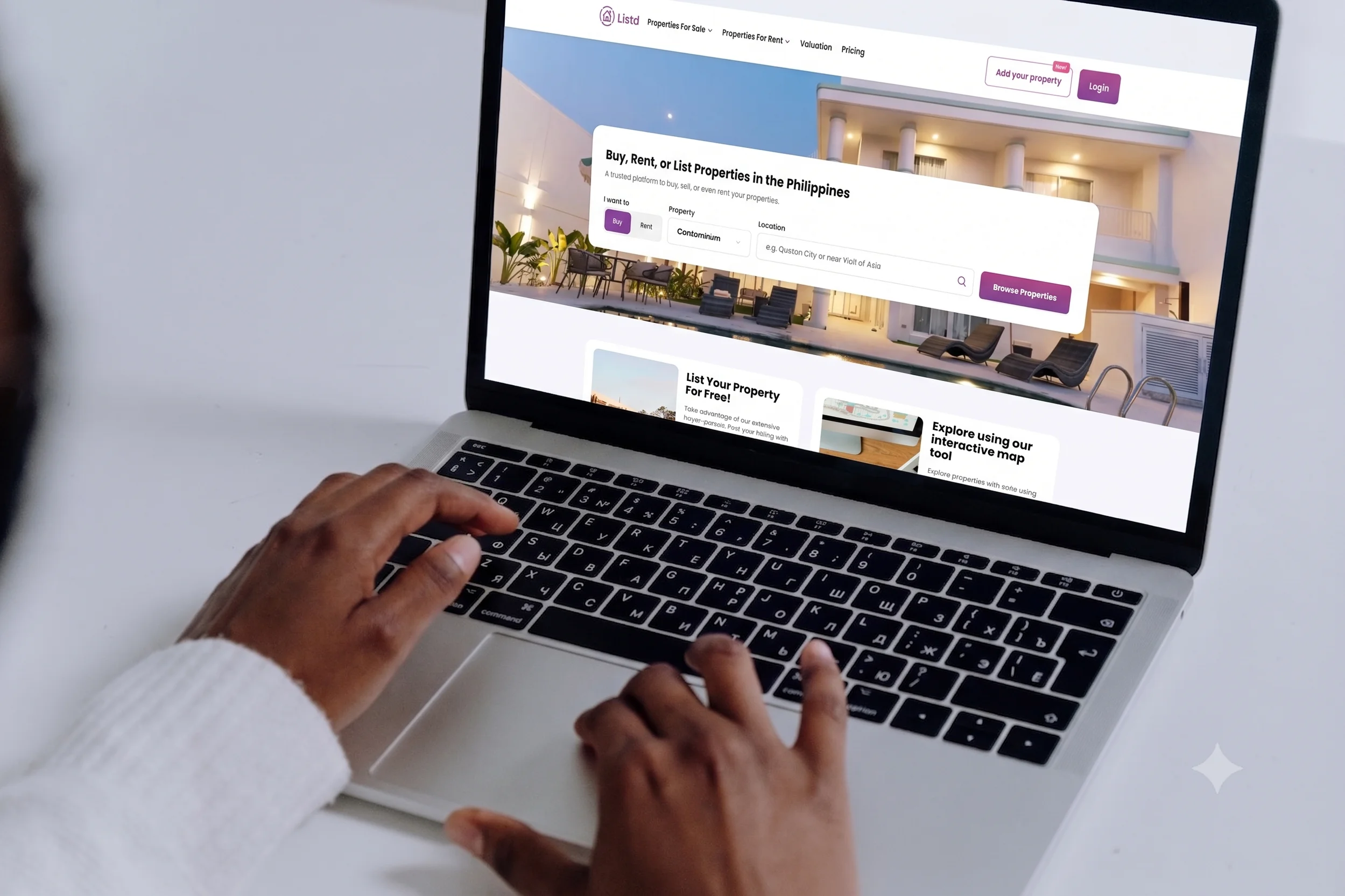
Whether you are looking for a house and lot with a clean TCT or a high-yield condo investment covered by a CCT, Listd.ph makes the search easy.
Browse over 100,000 verified listings across the Philippines. Use our interactive map to explore neighborhoods, filter by your exact budget, and connect with licensed brokers.
Start your property search on Listd.ph today.
About the Author

Enjoyed this article? Share it with others.
Latest Posts

BGC Office Market 2026: What the Data Means for Condo Buyers Near Bonifacio Global City
Savills 1Q 2026 data shows BGC office vacancy at just 8.0%. Discover what tightening supply and rising rents mean for condo prices and investments near Bonifacio Global City.

Complete Guide to Taxes and Fees When Buying Property in the Philippines
Buying property in the Philippines? Learn the full breakdown of taxes, fees, and closing costs so you can budget accurately before you sign.

Real Estate Broker Lead Generation in the Philippines: Top Strategies for 2026
Discover proven lead generation strategies for real estate brokers in the Philippines. Attract more buyers and sellers with digital tools, AI platforms, and smart outreach tactics.

Condo HOA Fees in the Philippines: What's Covered, What's Not, and Your Rights as an Owner
Understand condo association dues in the Philippines — what's covered, rate ranges by area, your legal rights as an owner, and how to dispute illegal increases.

Commercial Space Checklist: What Top-Tier Tenants in Metro Manila Actually Demand
What do corporate tenants really want? From advanced EV charging to smart HVAC and bulletproof connectivity, discover the ultimate office space checklist for Metro Manila.

How to Spot Real Estate Scams in the Philippines: A Buyer's Protection Guide
Learn to protect yourself from property fraud in the Philippines — from fake titles to ghost projects. Includes step-by-step verification guides and legal remedies.

What the National Land Use Act Means for Property Buyers and Investors in the Philippines
The Philippines' National Land Use Act (NLUA) just passed the House. Here's what it means for buyers, investors, and developers in the property market.

Living in Mandaluyong: A Complete Neighborhood Guide
Explore our complete guide to living in Mandaluyong. Discover top neighborhoods, property prices, and lifestyle perks. Find your next home on Listd.ph!

Living in Alabang: A Complete Neighborhood Guide
Weighing a move to the south? Discover if living in Alabang is right for you with our data-driven guide to neighborhoods, schools, and property prices.

Capital Gains Tax in the Philippines: A Complete Guide for Property Sellers
Learn how capital gains tax works in the Philippines for property sellers - computation, exemptions, filing steps, and the full cost-of-selling breakdown.

Bank Housing Loan Philippines: A Complete Guide
Compare 2026 bank housing loan rates in the Philippines — BDO, BPI, Metrobank, and more. Find out which bank fits your profile and how to apply.

Living in Pasig City: A neighborhood and property guide
Weighing your Metro Manila options? Discover if living in Pasig City is right for you with our data-driven guide to neighborhoods, commutes, and property prices.

How to sell bare units faster with AI virtual staging
Help buyers see the potential of empty spaces. Learn how AI virtual staging allows brokers to transform bare units online while maintaining client trust.

Labor Day 2026: Securing the Filipino worker's dream of homeownership
Protect your hard-earned savings. This Labor Day, learn how Filipino workers can safely secure their dream home through the Pag-IBIG housing program.

When Supply Outpaces Demand: Navigating Metro Manila’s Condo Market in a High-Rate Environment
Protect your condo investment. Learn how to navigate Metro Manila's current oversupply and rising interest rates with strategic pricing and leasing options.

Condo pressures spur developer diversification
Navigate shifting market trends safely. Learn how current condo pressures are pushing Philippine developers to diversify and what it means for property buyers.

How to sell your property in the Philippines: A complete guide
Avoid costly surprises. Learn the step-by-step process of selling your property in the Philippines, from navigating seller taxes to safe title transfers.

A First-Time Homebuyer’s Guide to Buying Property in the Philippines
Buying your first home in the Philippines? Learn how to set a budget, choose between Pag-IBIG and bank loans, compute closing costs, and process your title.

Living in Makati: A Complete Neighborhood Guide
Thinking of living in Makati? Explore the best neighborhoods, average condo prices, commute tips, and lifestyle perks in the Philippines' financial capital.

Where to Buy a Vacation Home in the Philippines
Discover the top places to buy a vacation home in the Philippines. Compare actual prices, rental yields, and hidden property risks before you invest. Learn more.

OFW Property Investment in the Philippines
Secure your hard-earned savings. Discover the safest ways for OFWs to invest in Philippine real estate, verify properties, and build a future back home.

Real Property Tax in the Philippines: Complete Guide
Learn everything about real property tax (amilyar) in the Philippines - how to compute it, when to pay, and how to avoid penalties.

Preselling vs. Ready-for-Occupancy Condo in the Philippines: Which Is Right for You?
Preselling vs. RFO condo: which is right for you? Discover the pros, cons, and legal protections every Philippine property buyer needs to know before signing.

Foreclosed Properties in the Philippines: A Buyer's Guide
Looking to buy foreclosed properties in the Philippines? Learn how to find, bid on, and buy bank-owned or Pag-IBIG foreclosures at below-market prices.

How to get an online property valuation report in the Philippines
Learn how to get an accurate online property valuation report in the Philippines. Discover the Listd.ph AI valuation tool to make confident real estate decisions.

Rental Property Investment: How to Evaluate a Property Before You Buy
Master your next rental property investment in the Philippines. Learn how to evaluate rental property, calculate yield, and run proper due diligence.

How to Choose the Right Property Manager (A Guide for First-Time Investors)
Not sure how to choose a property manager? This guide covers fees, screening, staff ratios, and communication standards to help first-time investors get it right.

Is It a Good Time to Buy Property in 2026? What the Market Is Telling Us
Thinking of buying property in 2026? Here's an honest look at interest rates, inventory levels, and market signals to help you decide if now is the right time.

The modern-day hero's guide to safe property investing in the Philippines
Protect your hard-earned remittances. Discover the safest way for OFWs to invest in Philippine real estate, avoid scams and verify developers with Listd.ph.

Rent to Own House Philippines: The Complete Guide
Everything you need to know about rent to own homes in the Philippines — how it works, what to watch out for, and how to find the best deals. Check it here.

PagIBIG Housing Loan Requirements for Self-Employed Applicants Checklist
Essential Pag-IBIG housing loan requirements. Learn how to prep your HLAF, valid IDs, and selfie for a faster application. Start your home journey now!

How to apply for a house loan through Pag-IBIG: A step-by-step guide
Turn your dream home into reality. Discover how the Pag-IBIG housing loan offers the most accessible path to homeownership in the Philippines. Learn more!

Cost of renting an apartment in the Philippines
Determining the cost of renting an apartment in the Philippines is complex. Navigate the rental market, move-in fees, and location variables confidently.

Cost of building a house in the Philippines
Learn the vital factors influencing your 2026 home construction budget in the Philippines. Gain insights on material costs, budgeting, and planning your ideal house.

Buying a House as an Unmarried Couple in the Philippines: A Safety Guide
Buying a house in the Philippines as an unmarried couple? Learn the essential legal differences (Article 147 vs 148), titling options, and 3 key steps to protect your investment. Secure your future home.

BIR Zonal Values in the Philippines 2026: The Essential Property Seeker's Guide
Avoid hidden property costs. Learn what BIR zonal values are, how to easily check them online, and how they impact your real estate taxes in the Philippines.

Condo for Sale in the Philippines: The Complete Buyer's Guide
Searching for a condo for sale in the Philippines? Discover 2026 prices, bank rates, hidden costs, the 50-year rule explained, and a step-by-step buying checklist.

The Ultimate House Buying Checklist: Don’t Buy a Home Without It
Buying a home in the Philippines? Master the process with our 6-phase checklist. From Pag-IBIG readiness to title transfers, ensure a safe and secure purchase.
Stay Updated on Market Trends
Get the latest real estate insights, investment tips, and market analysis delivered to your inbox every week.
Join 10,000+ subscribers. No spam, unsubscribe anytime.